
Things to Do in Bujumbura in May
May weather, activities, events & insider tips
Low Season · Budget Friendly
May Weather in Bujumbura
Long-run averages for May
85°F (29°C)
High Temp
66°F (19°C)
Low Temp
2.2 inches (56 mm)
Rainfall
80%
Humidity
12
Sunny-Day UV
⚠ Malaria risk remains elevated through May as the wet season's mosquito populations have not yet declined. Consult a travel health professional about antimalarial medication before departure, use repellent consistently at dusk and dawn, and sleep under a treated net if your accommodation does not have screened windows or reliable air conditioning.
⚠ Afternoon storms, while less frequent than in March and April, can produce intense localised downpours that flood unpaved roads and low-lying areas within minutes. If you are driving outside the city, toward Karera or Gitega, carry a charged phone, allow extra time, and avoid crossing flooded road sections on foot or by vehicle, as the depth and current are impossible to judge from the surface.
Is May Right for You?
Weigh the advantages and considerations before booking
Advantages
- + May lands at the hinge between Bujumbura's wet and dry seasons. The landscape stays intensely green from months of rain. But the downpours have eased considerably. Rainfall drops to roughly 56 mm (2.2 inches) for the month, less than half of what March and April deliver. You get the visual payoff of a lush equatorial city without the daily soakings that make April plans unreliable. The hills ringing Lake Tanganyika look almost impossibly fertile, terraced with banana groves and cassava plots that glow under the afternoon light.
- + Lake Tanganyika is at its most swimmable in May. The shoreline water along Saga Beach and the public stretches north of the city centre tends to be calmer than during the heavy rains, when runoff muddies the shallows and stirs up sediment. By mid-May the lake often clears to that pale jade colour that photographs never quite capture. The late-afternoon breeze off the water drops the perceived temperature by several degrees. You can wade out a surprising distance on the sandy bottom before it shelves away.
- + This is one of the quietest months for international visitors. Bujumbura never hits tourist-crush levels the way East African safari hubs do. May sees even fewer arrivals than the June-to-September dry season that draws the small organized-tour circuit. That translates to easier logistics. Day-trip operators have more flexibility on scheduling. Lakefront spots that fill up on dry-season weekends have midweek space. The general rhythm of the city feels unhurried in a way that lets you absorb the place.
- + Birding conditions in and around Rusizi National Park are likely at their best. The wetlands at the mouth of the Rusizi River, where it empties into Lake Tanganyika about 15 km (9.3 miles) northwest of the city centre, are still flush with water. That concentrates wading birds, kingfishers, and the herons that stalk the papyrus margins. The hippo pods in the river channels tend to be visible from the banks without needing a boat, since water levels keep them in the shallower stretches.
Considerations
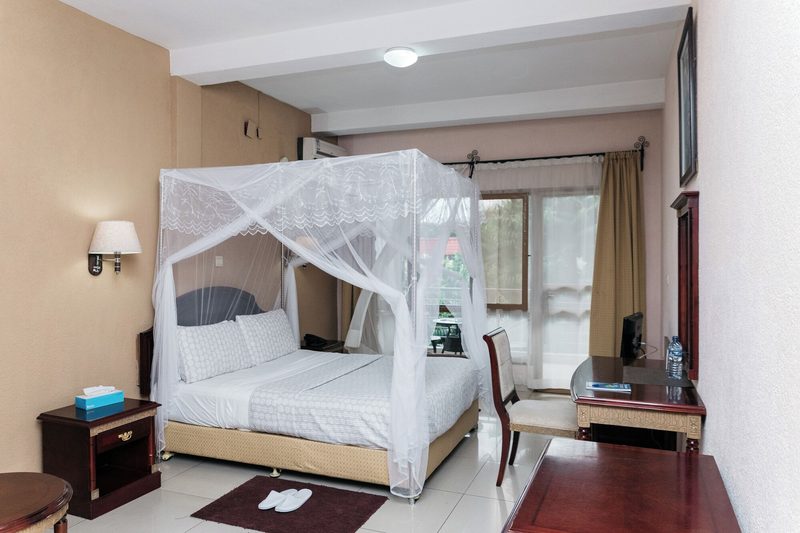
- − Humidity hovers around 80% through May. It is the heavy, clinging kind that settles on your skin the moment you step outside in the morning. Even with temperatures topping out at a modest 29°C (85°F), the moisture in the air makes midday feel considerably hotter. Air conditioning is not universal in Bujumbura's guesthouses and mid-range lodgings, so sleeping can be uncomfortable if your room relies on a ceiling fan alone. Locals keep windows open at night and let the lake breeze do the work. But that only reaches properties within a few blocks of the shore.
- − While May is drier than the preceding months, it has not fully turned the corner into Bujumbura's true dry season. Scattered afternoon showers still appear, sometimes without much warning. They tend to be shorter and less intense than the March-April deluges. But they can still turn unpaved roads in the hillside neighbourhoods and on routes outside the city into slick clay. If you are planning excursions to Karera Waterfalls or the Source of the Nile monument, factor in the possibility that the last stretch of road may be muddy enough to require a capable vehicle.
- − Bujumbura's tourist infrastructure remains limited compared to regional capitals like Kigali or Nairobi. Organized tour options are few. Guided services sometimes require advance coordination through local operators rather than same-day booking. English-language signage is sparse outside the lakefront hotel strip. You will need patience, a working knowledge of French or at least a translation app, and a willingness to navigate a city that has not been packaged for easy consumption. That rawness is part of the appeal. It is not for every traveler.
Best Activities in May
Top things to do during your visit
May is a turning point along the western shore of Lake Tanganyika. The heavy rains that drench Bujumbura through March and April ease noticeably. Rainfall drops to roughly half of what falls in the wettest months. The city exhales. Daytime temperatures hold steady near 29 degrees Celsius (85 Fahrenheit), warm enough that the lake's surface throws back a copper glare by mid-afternoon. Evenings settle into a mild 19 degrees. That makes the terrace restaurants along Avenue du Lac comfortable without a jacket. The air still carries the mineral tang of recent rain. The hillsides above the city are at their greenest, the laterite earth dark and saturated between rows of banana palms and cassava. Bujumbura's rhythm in May is unhurried. The transition out of the wet season means roads to the interior are passable but not yet dusty. These lead toward the Karera Waterfalls, the Rusizi delta, and the Nile source marker near Rutovu. The rivers still run full enough to feed the waterfalls at their most theatrical. The city itself stretches along the lake's northeastern tip. Its low-slung commercial blocks give way to sandy beaches where pirogues are dragged ashore each morning. Their wooden hulls are still slick with the night's catch of ndagala. Getting around Bujumbura is straightforward. Motorcycle taxis and ride-hailing apps cover the compact urban grid efficiently. Fares rank among the most affordable in East Africa. That is a practical consideration for visitors planning day trips to the surrounding parks and monuments. For travelers weighing safety, Bujumbura's central districts are well-patrolled and walkable by day. These include Rohero, Kiriri, and the lakefront corridor. The usual urban caution applies after dark. Hotels cluster along the lake and in the Rohero quarter. These range from guesthouses to full-service properties with pools and generators. Restaurants lean heavily on grilled tilapia, brochettes of goat seasoned with pili-pili, and cold Primus beer. A handful of spots offer Lebanese and Indian cooking. Nightlife concentrates along the lakefront road. Open-air bars fill on weekends with Congolese rumba and local gospel drifting from competing sound systems. May sits in a sweet spot. It is drier than the preceding months, cooler than the scorching August peak, and well before the second rains return in October.

3 Day Burundi Tour- Multi-Day Burundi Sightseeing Tour with Karera Waterfalls
day_tripThe three-day Burundi sightseeing tour built around the Karera Waterfalls is the kind of itinerary that earns Burundi its reputation among overland travelers. The route climbs east from Bujumbura into the highland interior. The air cools there. The landscape shifts from lakeshore palms to terraced tea plantations and stands of bamboo wrapped in low cloud. Karera itself is a series of four cascades dropping through moss-covered rock into pools so clear the stones on the bottom look magnified. The roar of the main fall drowns out conversation from twenty meters away. The mist that lifts off the basin coats your skin in a fine, cool film.
Karera is the most dramatic waterfall system in Burundi. The overland drive to reach it passes through highland scenery that most visitors to Bujumbura never see.
Insider tip: Wear shoes with serious grip for the trail to the lower pools. The rock is slippery year-round, but so in May when residual moisture from the wet season keeps the moss saturated.
This month: May's position at the tail of the rainy season means the waterfalls run at high volume. Expect the fullest, loudest cascades of the drier half of the year.

Bujumbura City Tour
guided_experienceA guided city tour of Bujumbura compresses the capital's contrasts into a single day. The route typically threads from the colonial-era buildings near the central market. The smell of roasting cassava and dried fish hangs thick over the stalls there. From there it runs through the Musee Vivant, home to crocodiles, hippos, and a small collection of traditional Burundian drums. Then out to the sandy public beaches where fishermen mend nets beside sunbathers. The guide fills gaps that a solo walk cannot. These include the story behind the Independence Monument, the reason the cathedral's twin towers are slightly asymmetrical, and the local name for the lakefront strip where Bujumbura's social life concentrates after dark.
The most efficient way to decode a city that reveals itself through conversation and context rather than signage and self-guided trails.
Insider tip: Ask the guide to include a stop at the central market before ten in the morning. Vendors are still arranging pyramids of avocados and passion fruit then. The aisles are navigable. By noon the heat and crowd density make browsing a chore.

3 Day Burundi Nile Source Gitega Rusizi Park
otherThis three-day route connects three of Burundi's most significant sites in a single arc: the Nile source pyramid near Rutovu, the royal capital of Gitega, and Rusizi National Park on Bujumbura's southern flank. The Nile source marker sits on a hillside above a modest spring. This is the symbolic southernmost source of the world's longest river. The experience is more contemplative than spectacular. A trickle of cold, iron-tasting water emerges from red earth, surrounded by eucalyptus and silence. Gitega delivers the cultural counterweight. The National Museum there holds a collection of royal drums and beaded regalia. The final leg drops back to the Rusizi delta. Hippos surface in the tea-brown water with a snort audible from the bank. Papyrus reeds rustle in the wind off Lake Tanganyika.
Three days, three entirely different landscapes, highland springs, museum culture, and lowland wetlands, with Bujumbura as the anchor point.
Insider tip: Bring binoculars for Rusizi. The hippo pods tend to cluster in the wider channels a hundred meters from the viewing areas. With optics you can count the oxpeckers riding their backs.
This month: The Rusizi delta is well-watered in May. This keeps hippo pods concentrated in the main channels rather than dispersed into seasonal flood plains. Sighting conditions are favorable.

Private Tour of Bujumbura
private_tourA private tour of Bujumbura strips away the group dynamic. It lets the day bend to your curiosity. The format typically covers the city's core landmarks. These include the lakefront, the Musee Vivant, the central mosque, and the Independence Monument. With a private guide, detours are the point. Ask to visit the Kinama neighborhood. Women there weave ilala palm baskets on their doorsteps. The finished coils smell of dried grass and wood smoke. Request a stop at one of the informal lakeshore grills. Whole tilapia are butterflied over charcoal there. The skin comes blistered and salt-crusted. These are served on a sheet of banana leaf with a squeeze of lime.
The flexibility to follow what interests you rather than a fixed checklist. Bujumbura rewards detours more than monuments.
Insider tip: Negotiate with your guide to end the tour at Saga Plage or one of the lakefront beach bars in the late afternoon. The western light turns Lake Tanganyika a deep amber then. The temperature drops to its most comfortable.

Discovering the Wonders of Burundi: A 7-Day Tour itinerary
guided_experienceSeven days in Burundi is enough to feel the country rather than skim it. This itinerary radiates out from Bujumbura in concentric loops. The Rusizi wetlands and Lake Tanganyika beaches come first. Then the highland arc through Gitega, the Karera Waterfalls, and the Nile source. Finally it swings north toward the Kibira rainforest. Colobus monkeys crash through the canopy overhead there. The forest floor is spongy with decades of decomposing leaves. The route covers nearly every landscape Burundi contains. These include lakeshore, savanna, highland plantation, and montane rainforest. The contrast between them is sharper than the country's small size would suggest. Meals along the way lean on regional staples. These are beans simmered with palm oil in the lowlands, grilled goat in the highlands, and fresh sambaza from the lake fried until the tiny fish crunch between your teeth.
The most complete way to experience Burundi's full geographic and cultural range, with logistics handled so you can focus on the country itself.
Insider tip: Pack layers. Bujumbura's lakeside warmth gives way to cool nights in the highlands above Gitega. The Kibira forest can feel cold and damp even during the day.

Full-Day Tour Bujumbura With Rusizi Park And Stanley Monument
day_tripThis full-day tour pairs Bujumbura's urban sights with two of its most accessible natural and historical landmarks. Rusizi National Park sits just south of the city. The Rusizi River empties into Lake Tanganyika there through a delta of papyrus and palm. A boat or walking approach brings you within earshot of hippos grunting in the shallows. Herons and kingfishers work the mudflats. The Stanley-Livingstone Monument is a quieter stop. This marks the spot where the explorer confirmed the lake's geography. It is a stone plinth on a grassy rise with a clear sightline across the water to the mountains of the Democratic Republic of Congo. Their ridgeline turns blue and hazy in the afternoon heat. The combination grounds the day in both ecology and history. These two registers define Bujumbura's identity more than its modest skyline does.
The most time-efficient way to see both Rusizi's wildlife and the Stanley Monument without committing to a multi-day itinerary.
Insider tip: Bring a hat and water for the monument. Shade is scarce at the site. In May the midday sun is direct despite the cloud cover that sometimes builds by early afternoon.
Where to Stay in Bujumbura in May
Hand-picked hotels across price tiers for May travellers.
Public Holidays in May
Dates that affect opening hours, transport and crowds
Labour Day
Observed nationwide as a public holiday.
Ascension Day
Observed nationwide as a public holiday.
Labour Day
Observed nationwide as a public holiday.
Ascension Day
Observed nationwide as a public holiday.
Packing Checklist
Bookmark this page — your progress is saved between visits
Need the full list with shopping links?
Climate-specific gear, brand recommendations, and what to leave at home.
View Bujumbura Packing List →Essential Tips
Insider knowledge and common pitfalls to avoid
Insider Knowledge
Bujumbura's ride-hailing scene has changed the city's transport logic. Bolt operates here and tends to be more reliable and transparent than negotiating with taxi drivers at the roadside, where the fare discussion itself can take longer than the ride. Having the app on your phone with a local SIM card, which you can pick up at the airport or any mobile-money kiosk in town, removes the single biggest friction point of getting around. That said, for short hops within the city centre, motorcycle taxis are faster and the drivers know every backstreet shortcut through the grid. Negotiate the fare before you climb on, and hold on with both hands, as the driving style is assertive.
The brochette stands along the lakefront road, the cluster south of the old port area, are where Bujumbura's food culture is at its most honest. Goat is the canonical choice, skewered and grilled over charcoal until the fat renders and the edges char, served with a heap of fried plantains and a sharp chilli sauce that varies from stall to stall. The smell of charcoal smoke and dripping fat carries for blocks. Go between 6 and 8 PM when the grills are freshest and the lakefront crowd is settling in for the evening. The beef brochettes are fine. But goat is the order that marks you as someone who knows what they are doing.
Bujumbura's nightlife clusters along a handful of lakefront bars and music spots that come alive on Thursday, Friday, and Saturday evenings. The sound is typically a mix of Burundian rumba, Congolese soukous drifting across from the DRC influence, and whatever is current on East African radio. The atmosphere is social, not performative. Locals are curious about and welcoming toward visitors who show up without an entourage or a tour guide. Beer is the social lubricant, with Primus the ubiquitous local lager, served in large format bottles that get shared across the table. Pace yourself. The altitude and humidity amplify the effect.
If the safety question is on your mind, and it should be since Burundi's recent political history is turbulent, the practical reality in Bujumbura in 2027 is more complex than the travel advisories suggest. The lakefront, the city centre, and the main commercial districts are generally calm and functional during the day. Standard urban precautions apply. Avoid displaying expensive electronics. Do not walk alone in poorly lit areas after dark. Keep aware of your surroundings in crowded market spaces. The areas to avoid are the peripheral neighbourhoods on the northern and eastern edges of the city, and travel outside Bujumbura after dark is strongly discouraged. Register with your embassy before arrival, keep your accommodation's contact details on you, and maintain a low profile. Most visitors who exercise reasonable caution report feeling safer than they expected.
Avoid These Mistakes
Underestimating the sun because the sky looks hazy. Bujumbura sits close to the equator at moderate altitude, and the UV penetrates cloud cover and haze with an intensity that does not match the visual brightness. Travelers who would never skip sunscreen on a clear beach day in the Mediterranean get badly burned here on an overcast morning by the lake. Cover up. Reapply protection frequently. Treat every outdoor hour as full-exposure time.
Trying to cram Bujumbura into a single day between flights. The city reveals itself slowly, through repeated visits to the same market stall, through conversations that start in halting French and end with an invitation to someone's table. The real texture of the place, the way the light changes on Lake Tanganyika between morning and late afternoon, the difference between the city's daytime commerce and its evening lakefront social life, needs at least three full days to register. Rushing through on a 24-hour transit produces a flat, unrepresentative impression.
Assuming that international credit cards will work reliably. Cash remains the primary currency in most of Bujumbura's daily transactions, and while top-end hotels and a few restaurants accept cards, the ATM network is inconsistent and machines sometimes run out of notes or refuse foreign cards without explanation. Arrive with enough US dollars or euros to exchange at a bureau de change in the city centre, and carry Burundian francs for all market purchases, transport, and smaller establishments. Mobile money via Lumicash or Ecocash is increasingly common for local transactions. But setting it up as a visitor requires a local SIM and some patience.
Ready to plan your trip to Bujumbura?
Now that you've got the research covered, here's where to go next.
Explore More Activities in Bujumbura
Didn't see anything interesting yet?
Browse Viator's full catalog of tours, day trips, food experiences, and private guides in Bujumbura.
See All Bujumbura Tours on Viator